

Under the legs
How bed bug interceptors work, and how many your home needs
An interceptor is a plastic cup that sits under a bed leg and holds the bed bugs that walk into it from the floor. Here is why they stay in, where each cup goes and how many your home takes.
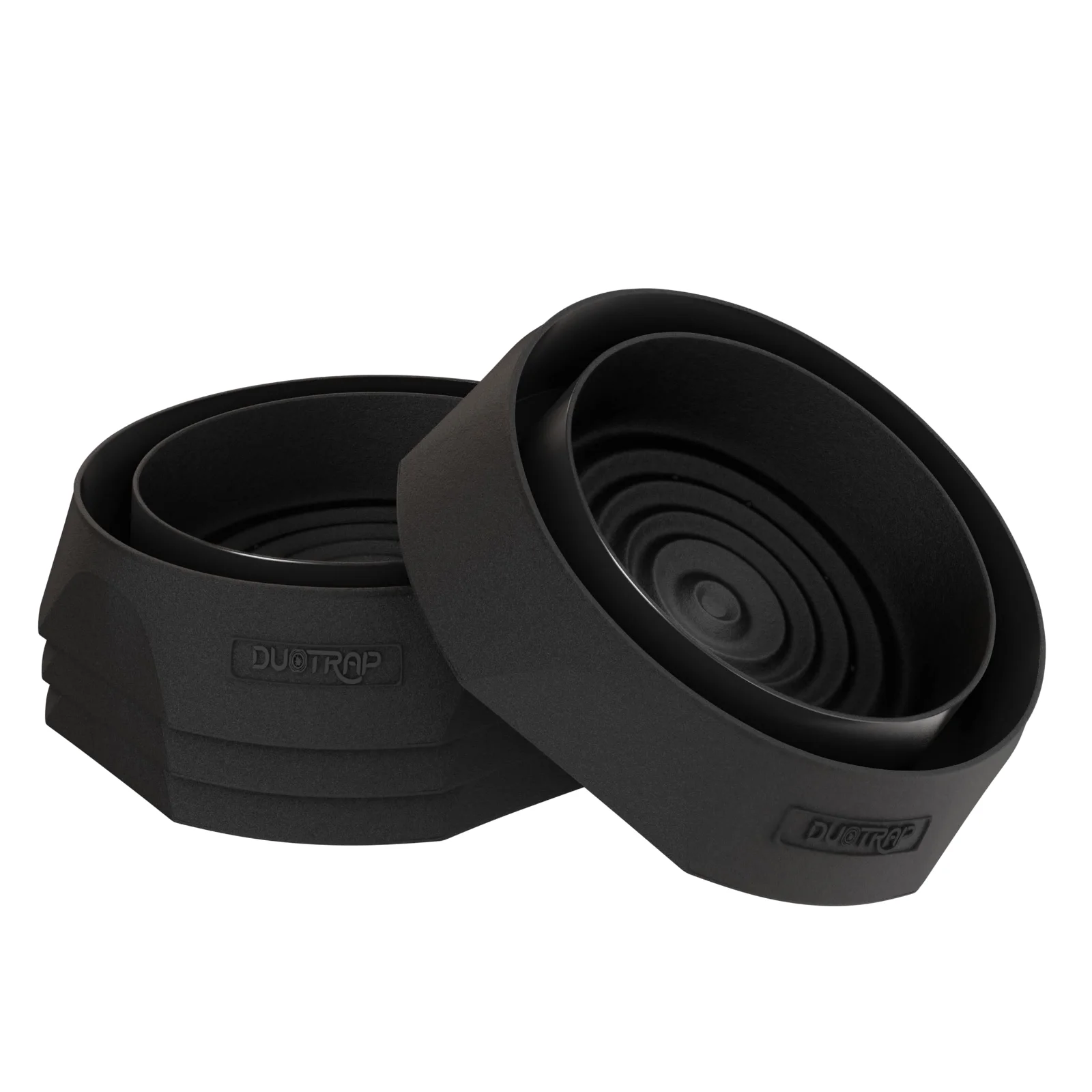
Why a bed bug cannot climb out of the cup
From the floor, the way onto your mattress runs up the legs of the bed, the frame, or anything that touches it. An interceptor sits on that route. You lift the leg, set the cup down, and lower the leg into the center well, so every step a bug takes toward the bed passes over plastic.
Texas A&M AgriLife Extension explains the trick in one line: bed bugs climb slippery vertical walls poorly. A typical cup gives the bug a rougher outer face it can grip on the way up and a slick inner wall it cannot grip on the way out. Once a bug drops into the well between the two, the smooth plastic keeps it there until you look.
That is also why the bed has to stay off the wall and the blankets off the floor. A bug that reaches the frame some other way, along a blanket or a headboard pressed to the plaster, never meets the cup at all.
Nothing in the cup is sprayed, heated or plugged in. An interceptor does not kill bed bugs and does not clear a home of them. It does two quieter jobs. It stands between the floor and the place you sleep, and it keeps a record of what has been walking toward your bed between one look and the next.
Where each cup goes
The U.S. EPA gives the setup in plain terms: an interceptor under each leg of the furniture, the furniture moved a few inches off the walls, and no linens touching the floor. Texas A&M describes the same arrangement for a bed, with a cup under each bed post, the bed off the walls and no bedding on the floor. Entomologists at the University of Kentucky put the goal in a picture you can keep in mind while you work: the bed becomes an island.
- Pull the bed a few inches away from the wall, as the EPA advises, so the headboard and the frame stop acting as a bridge.
- Lift one leg at a time and set a cup under it. Count every leg that reaches the floor, including a center support leg under a queen or king frame.
- Tuck in the bedskirt, blankets and throws until nothing hangs down to the floor, the step both the EPA and Texas A&M spell out.
- Move whatever leans on the frame: a nightstand pushed against the rail, a bag on the floor, a laundry basket. Each one is a way onto the island.
- Keep the bed off the wall after it is made, since a blanket or a pushed frame quietly undoes the gap.
The same rule reaches past the bed. The EPA wording is about each leg of the furniture, not only the bed frame, so a couch or armchair where someone sits for hours gets cups of its own. A bed on a solid platform with no legs has nothing to set a cup under, and that is the one case where cups cannot do their job. The traps and monitors shelf carries detectors that sit on the floor instead.
The floor under the cup matters too. Zulu Supply asks for a clean, level surface under each interceptor, and a cup that rocks on a thick rug or tilts on an uneven board does not sit flat under the leg. On deep carpet, press the cup down until the leg rests squarely in the well before you let go of the frame.
How many cups your home needs
Start with the legs, not the rooms. A plain twin frame usually stands on four legs. A queen or king frame often adds a center rail with one or two more legs, and each of those needs a cup too. Add the legs of any couch, recliner or daybed that someone sleeps or sits on for long stretches.
Texas A&M offers a useful benchmark for a whole home: at least 12 cups for a two-bedroom apartment. Use it as a check on your own count, not a substitute for it. Our interceptor calculator page walks you through the count leg by leg and matches it to the pack sizes on the shelf, which run from single cups to 12-packs.
| Source | Where the cups go | How often to look and clean |
|---|---|---|
| U.S. EPA | Under each leg, furniture a few inches off the walls, no linens touching the floor | Check and clean the cups every week, keep inspecting at least every 7 days |
| Texas A&M AgriLife Extension | Under each bed post, bed off the walls, no bedding on the floor, at least 12 cups for a two-bedroom apartment | Clean the cups at least once a month |
| University of Kentucky Entomology | A trap under each leg with the bed pulled off the wall, so the bed stands as an island | Not given |
Each row repeats what that page says. The weekly look comes from the EPA, the monthly minimum for cleaning from Texas A&M.
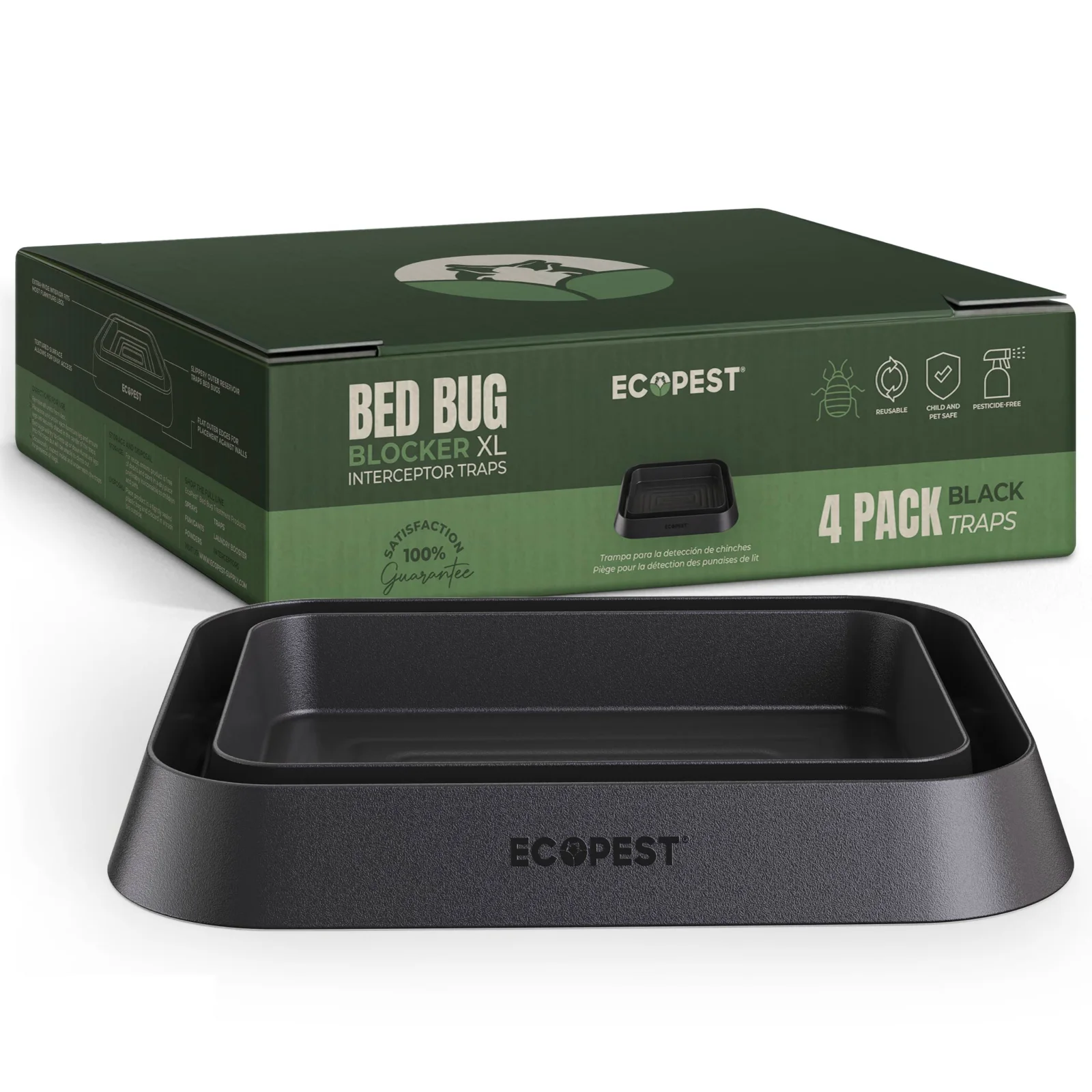
Leg width matters as much as leg count. The maker of each cup prints the size of its opening: Zulu Supply, for one, gives 4.25 inches for its standard cup. Wide posts, large beds and some casters need more room, and that is what the XL interceptors are for. Measure the foot of your widest leg before you order, since a leg that rides on the rim instead of resting in the well leaves a gap.
How often to look, and when to clean
A cup only tells you something when you look into it. The EPA advice is to check and clean the interceptors every week and to keep inspecting at least every 7 days. Texas A&M sets its cleaning minimum at once a month. Put together, that gives you a simple rhythm: a look into every cup each week, and a full cleaning at least monthly.
A flashlight makes the weekly look quick. Wipe out whatever has collected in each well as you go, and pick one day of the week and keep it, because a cup you forget for a month is a month of nothing learned.
Keep a short note each week: the date, the room and whether any cup held a bug. A run of empty weeks is information too, and a written record makes it easier to describe what you found if you later call in a professional.
If a cup holds a bed bug, take it seriously but calmly. One catch tells you bugs are moving between the floor and your bed, and it does not tell you how many there are or where they started. A home with an active infestation needs a licensed pest professional. Cups catch what walks into them, and clearing a home is a different job.
Picking cups from the shelf
Every cup on our shelves works the same way, so the choice comes down to how the cup fits your legs and how many you need. Color is a matter of taste: the black, white and clear versions of a cup work the same way.
| Cup | Cup size | Packs |
|---|---|---|
| EcoPest Bed Bug Blocker Pro Interceptors | Standard | 4, 8 or 12 |
| EcoPest Bed Bug Blocker XL Interceptors | XL | 4 or 8 |
| ShieldFlex TruGuard X Interceptors | Standard | 8 or 12 |
| ShieldFlex TruGuard XL Interceptors | XL | Single or 4 |
| Zulu Supply Passive Interceptor Cups | Standard | 4, 8 or 12 |
| Zulu Supply XL Passive Interceptor Cups | XL | 4 |
| DuoTrap Bed Bug Interceptor Traps | Standard | 4, 8 or 12 |
| PESTEZE Reusable Bed Bug Interceptor | Standard | 6 or 8 |
| Bed Bug Defender Passive Interceptor Traps | Standard | 12 |
Buy by the count you made, then round up to the next pack. A queen frame with a center rail and a couch with four legs already passes eight, and the 12-packs exist for exactly that kind of room. If one bed has wide posts, mix a pack of XL cups for that bed with standard cups for the rest of the home. Reusable cups go back under the legs after each cleaning, so one pack serves for as long as the plastic stays whole.
Cups guard the legs, and covers guard the mattress. The University of Kentucky notes that an encasement does not stop a bug from climbing onto the bed, which is exactly the gap a cup closes, while a zipped cover holds anything already inside the mattress. Our mattress encasement shelf and the piece on choosing a mattress encasement take you through the other half. The whole setup, cups, covers and monitors from many makers, sits in the Bed Bug Blocker catalog, where you can start from every interceptor we carry.
