

The mattress
Choosing a bed bug mattress encasement: size, depth and the zipper
A bed bug encasement zips your mattress or box spring inside a closed fabric shell. Choosing one comes down to the size, the depth, the way the zipper ends and how long you leave it on.
Encasement or protector: what the zipper changes
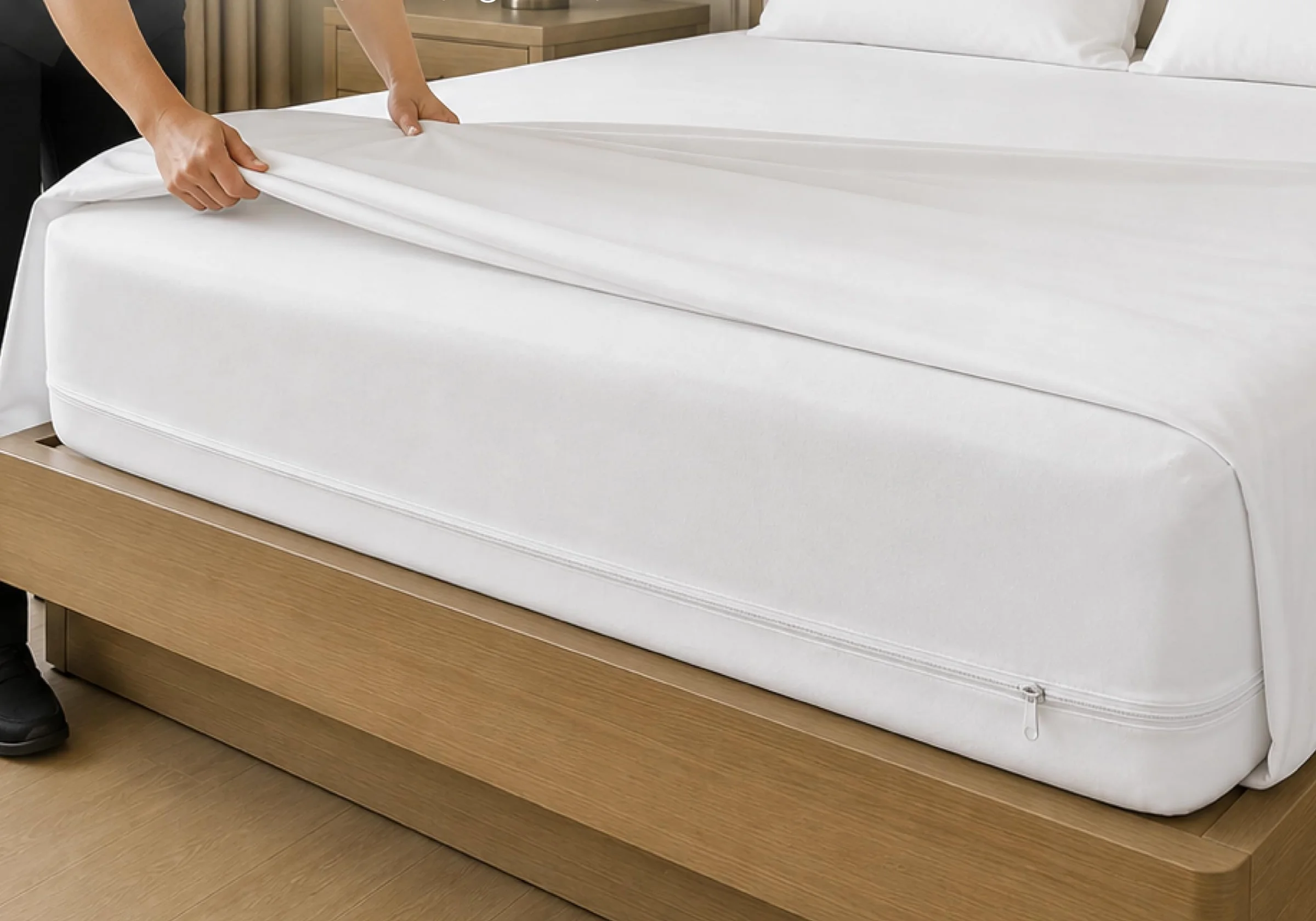
Two kinds of cover look alike in the package. A fitted protector goes on like a sheet: it covers the top and the sides, and the underside of the mattress stays open. An encasement wraps all six sides and closes with a zipper, so the mattress sits inside a sealed shell. For bed bugs, that zipper is the whole difference.
The U.S. EPA, in its advice on protecting a home, recommends a high quality encasement for the mattress and the box spring. Its do-it-yourself page explains why: covers that seal the mattress and box spring mean the bed bugs inside die. Entomologists at the University of Kentucky say the same thing from the other side. Bed bugs zipped inside an encasement eventually die.
Kentucky adds the limit that matters most when you plan the rest of the bed. An encasement does not stop a bug from climbing onto the bed from the floor. The cover holds what is inside the mattress, and the legs of the bed still need their own guard. The piece on how interceptor cups work covers that half.
Measure the depth before you pick a size
The size name sets the length and width of the cover: Twin, Twin XL, Full, Queen, King, California King. Depth is a separate number, and it is the one that most often goes wrong. A cover cut for a 9-inch mattress will not close around a 14-inch one, and a cover cut for 18 inches leaves loose fabric bunched under a thin mattress. Every encasement on our shelves states the depth range it fits, so all you need is your own number.
- Strip the bed down to the bare mattress.
- Measure at a corner, from the bottom edge to the top surface, with the tape held straight up.
- If a topper or pillow top will live inside the cover, measure with it in place.
- Pick the depth range that holds your number comfortably, rather than one where your mattress sits at the very edge.
- Do the same for the box spring, which has its own depth and its own cover.
Deep mattresses are where the range shows its limits. Many covers on our shelves stop at 15 inches, while a few makers cut bands for deeper beds, and those live on our deep pocket encasement shelf. If you sleep on a queen, the queen encasements have a shelf of their own. For the full chart of sizes and depth bands across every maker, the encasement size and depth guide lays them side by side.
Makers solve the depth problem in two ways. Some cut the same cover in bands a few inches apart, so you choose the band that holds your mattress and the fabric sits close to it. Others make one stretch body that spans a wide range, such as the Utopia Bedding cover at 6 to 15 inches. Both work once the cover closes without strain, and the table shows which approach each maker took.
| Encasement | Fits depth | Zipper |
|---|---|---|
| SureGuard Mattress Encasement | 6 to 20 inches, in depth bands | Runs all the way round |
| Hospitology Sleep Defense Mattress Encasement | 6 to 18 inches, in depth bands | Runs all the way round |
| Protect-A-Bed AllerZip Deep Pocket Encasement | 6 to 11 or 11 to 18 inches | Locking zipper |
| Degrees Of Comfort Bed Bug Mattress Encasement | 6 to 18 inches, in depth bands | Ends in a closed end |
| Mattressentials Zippered Mattress Protector | 5 to 16 inches, in depth bands | Ends in a closed end |
| PlushDeluxe Cotton Terry Mattress Encasement | 9 to 12 or 12 to 15 inches | Ends in a closed end |
| Slumberfy Bamboo Mattress Encasement | 9 to 12 or 12 to 15 inches | Runs all the way round |
| Utopia Bedding Zippered Mattress Encasement | 6 to 15 inches | Runs all the way round |
| Manchester Mills Protect360 Mattress Encasement | Up to 15 inches, King only | Locking zipper |
Depth ranges and zipper styles as each maker states them. Where a cover is sold in depth bands, choose the band that holds your mattress.
What happens at the end of the zipper
A zipped cover is sealed everywhere except where the zipper stops. The EPA asks you to check an encasement regularly for holes, and the end of the zipper is the first place to look, because a slider left a finger's width open is a hole like any other. Makers in our catalog deal with that end in three ways.
- A closed end: the zipper finishes inside a small pocket or flap, so the slider tucks away when the cover is shut.
- A locking zipper: the slider latches in place at the end of its run and stays put when the mattress shifts.
- A zipper that runs all the way round: the track circles three sides of the mattress, which makes the cover easier to pull on, and the slider still needs to travel the full length every time.
None of these replaces your own habit. Whenever the cover has been unzipped, close the zipper to its very end, and run a hand along the seams and the zipper track when you change the sheets. A tear anywhere in the fabric is a gap, and the EPA advice to check for holes covers the whole cover, not only the slider.
Putting the cover on is easier with two people on anything larger than a twin. On a cover with a closed end, slide that end of the mattress in first, as several makers describe, then work the fabric down the sides before you start the zipper. Pulling the zipper against a cover that is still twisted is how teeth split.
The box spring needs its own cover
Both EPA pages name the mattress and the box spring together. A cover on the mattress alone leaves the base under it open, and the EPA advice treats the two as one bed.
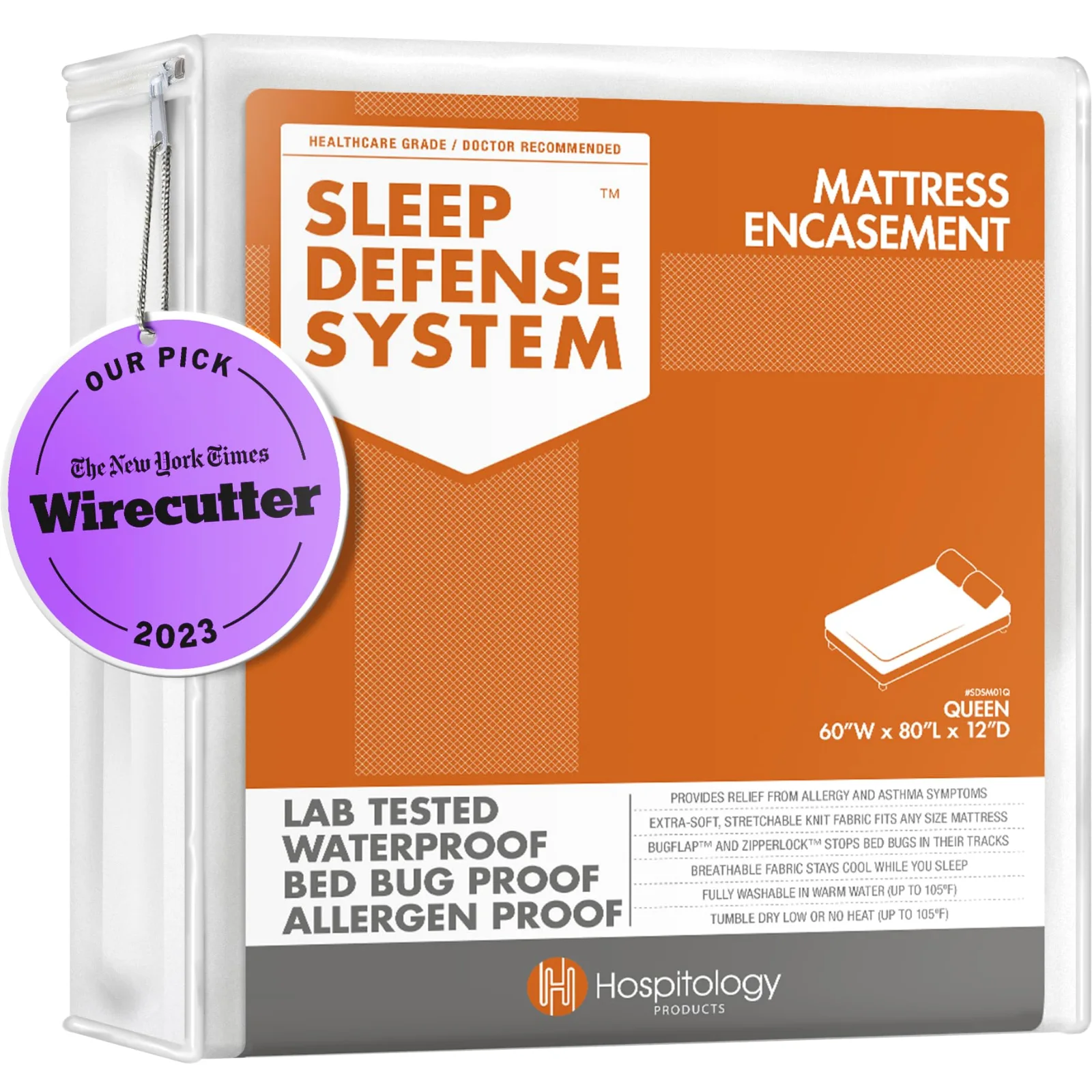
Box spring covers come in shallower depth ranges than mattress covers. In our catalog, Hospitology cuts its box spring encasement for 5 to 11 inches, SureGuard for 8 to 11, Guardmax up to 10 and Hygea Natural up to 9. Measure the box spring the same way you measured the mattress and pick the cover from the box spring encasement shelf. A platform bed with no box spring skips this step, and the frame itself is where the cups go.
A split king base, two narrow box springs side by side under one king mattress, needs a cover on each half. Hospitology sells its Split King box spring covers in 2-packs for that reason, and the halves zip shut separately.
How long the cover stays on
The EPA notes that bed bugs can survive several months to a year without feeding. That figure sets the timetable for an encasement. If you unzip the cover after a few weeks, anything still alive inside walks out, and the University of Kentucky point that bugs zipped inside eventually die only holds if they stay zipped. So plan on keeping the cover on for longer than that year, and the simplest plan of all is to leave it on for good.
Day to day, an encasement sits under your fitted sheet like a mattress pad. Most covers in our catalog are waterproof, which also keeps spills and sweat out of the mattress, and several have a cotton terry or knit top that feels closer to a sheet than to plastic. Those details are about comfort. The work against bed bugs is done by the zipper and the fabric staying whole.
Pillows sit outside the EPA advice for mattresses and box springs, but they share the bed. Zippered pillow covers close the same way a mattress encasement does and go on under your pillowcase. The pillow encasement shelf carries them in Standard, Queen, King and Body sizes.
If you already see signs of bed bugs in the home, a cover is one part of the answer, not all of it. A licensed pest professional is the one to call for an active infestation, and an encasement on the mattress and box spring keeps doing its job while that work goes on.
When you are ready to compare, the encasement comparison page lines up depth, zipper and top fabric across makers, and the mattress encasement shelf holds every cover we carry. For the cups that guard the legs and the pillow covers that close the same way, browse the Bed Bug Blocker catalog.
